Quick Answer
Yes. If your plan is to “sell my home fast in Florida” after a hurricane, you can do it with the tarp still on the roof. You can repair and list, list as-is, or sell to a local cash buyer. When the damage is heavy or FEMA’s 50% rule kicks in, a cash sale usually closes in 7 to 21 days with no repairs and no commission.
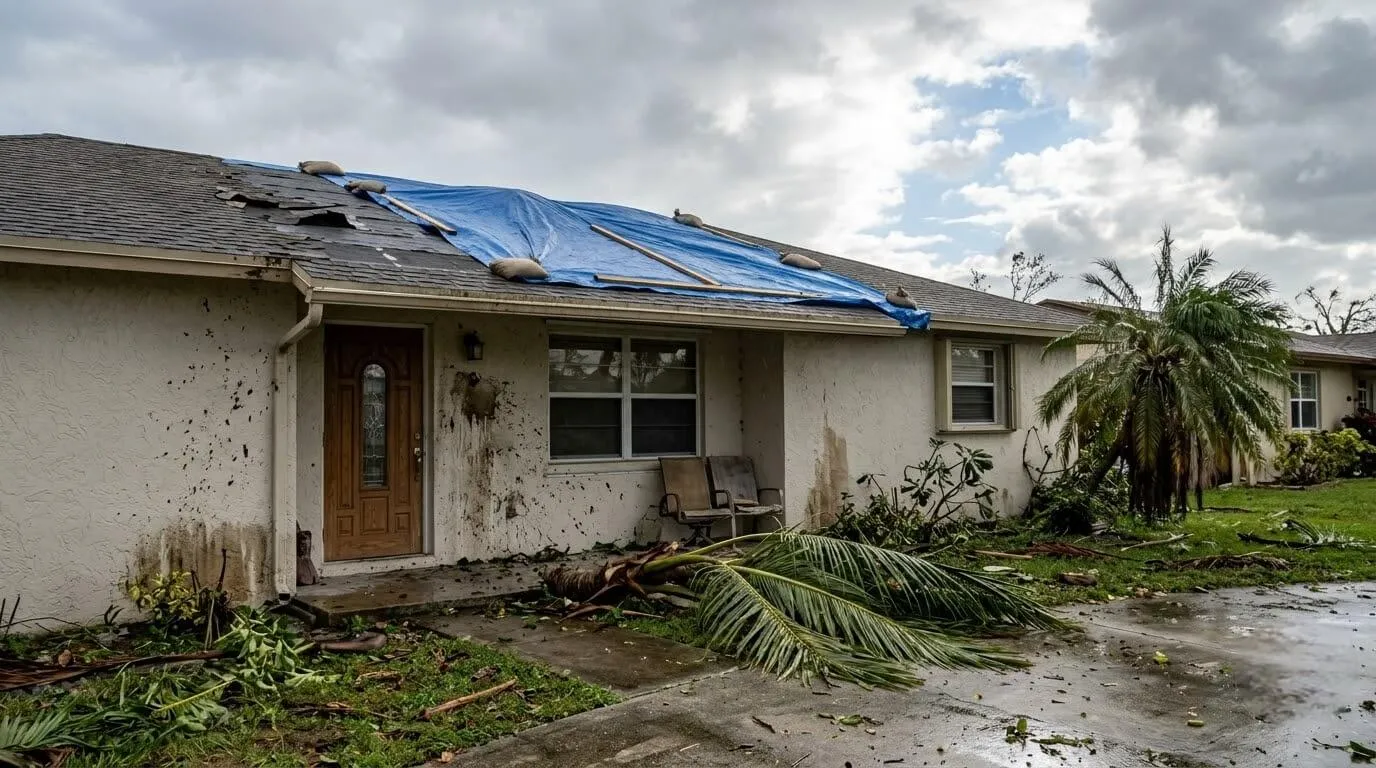
The storm passed weeks ago. The blue tarp is still on the roof, the adjuster hasn’t called back, and every contractor you’ve talked to is booked until spring.
If you’ve caught yourself thinking “I just want to sell my home fast in Florida and be done with it,” you’re not alone. I’ve had that exact conversation in a lot of Miami-Dade and Broward living rooms since 2012. Below is what your options really look like, what can slow a sale down, and how a cash sale works when the house isn’t ready to list.
Can you sell a hurricane-damaged house in Florida?
Yes. Nothing in Florida law stops you from selling a damaged home. What changes is who can buy it.
A buyer with a regular mortgage usually can’t close on a house with an open roof, active leaks, or mold. The appraiser flags it and the loan stalls. That leaves two kinds of buyers: people paying cash, and investors who plan to do the repairs themselves. If that’s new to you, here’s how it works when you sell a house as-is in Miami.
Your three options after storm damage
| Option | Typical timeline | What comes out of your pocket | Makes sense if |
|---|---|---|---|
| Repair, then list with an agent | 4 to 9 months, sometimes more | Repairs, commission, closing costs | Insurance covers the work and you aren’t in a hurry |
| List as-is with an agent | 2 to 4 months if a buyer’s financing holds | Commission, price cuts, closing costs | The damage is mostly cosmetic |
| Sell to a local cash buyer | 7 to 21 days | No repairs, no commission | The damage is serious or you need to move on |
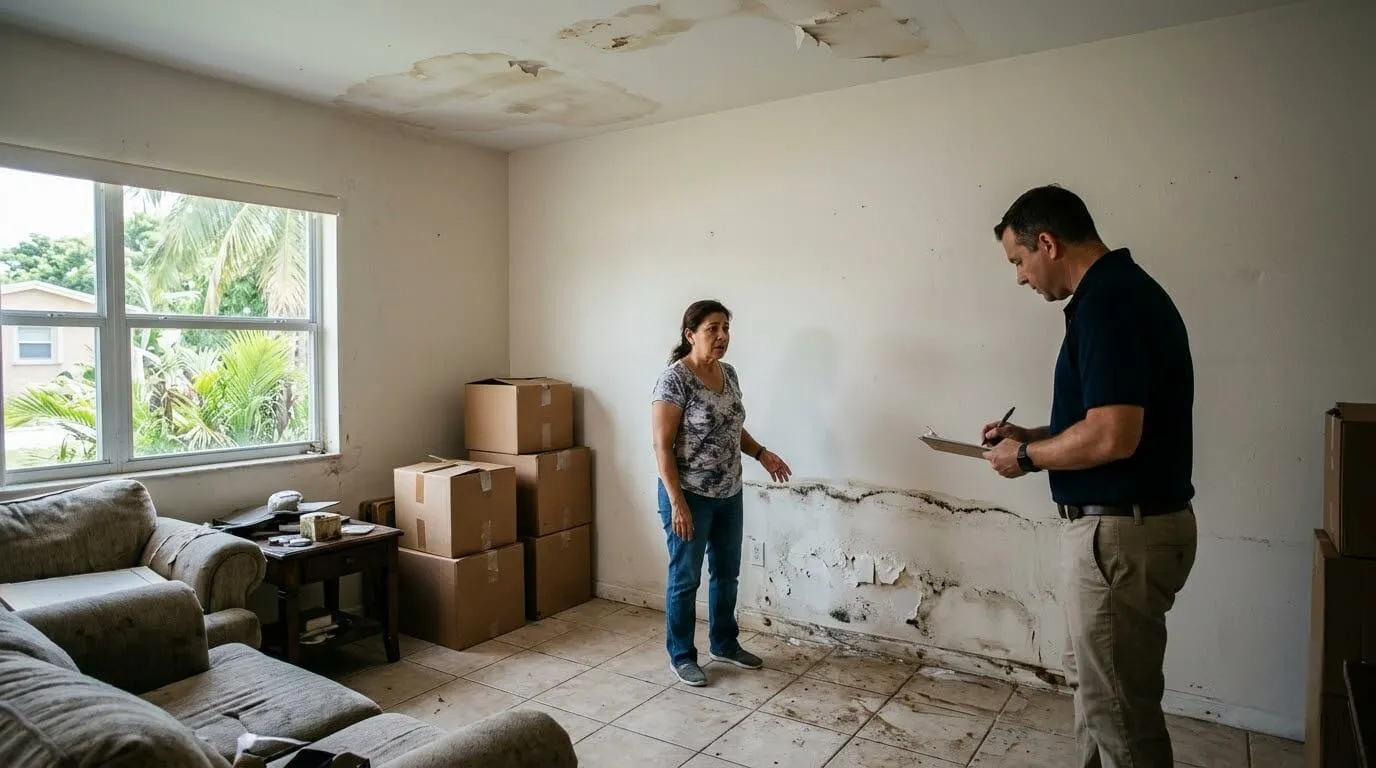
Fixing first can get you the highest price. The catch is time. After a big storm, roofers and contractors fill their calendars fast, and material costs tend to climb.
I’ve watched owners wait so long for a roofer that the next rainy season did more damage than the hurricane did.
Check the FEMA 50% rule before you start repairs
This one catches a lot of people off guard. If your home sits in a high-risk flood zone (one that starts with A or V), your local building department looks at how much the repairs will cost compared with the home’s market value before the storm.
When repairs hit 50% or more of that value, the home is labeled “substantially damaged” under FEMA’s rules. At that point you can’t just fix what broke. The house generally has to meet current flood rules, which can mean raising it off the ground.
- FEMA doesn’t make the call. Your city or county does.
- It only applies in the high-risk A and V flood zones.
- Owners sometimes appeal when the estimate lands close to the 50% line.
On an older ground-level home in Miami-Dade, elevating can cost more than the house is worth. That’s one of the most common reasons people decide to sell instead of rebuild.
Under the 50% line vs. over it
| What changes | Repairs under 50% of value | Repairs at 50% or more |
|---|---|---|
| What you’re allowed to do | Fix what the storm broke | Bring the whole house up to current flood rules |
| Permits | Standard repair permits | Extra review, and often an elevation certificate |
| Cost risk | Mostly the repair bill | Repairs plus possible elevation, which can run higher than the home’s value |
| What owners usually do | Repair and stay, or repair and list | Sell as-is to a cash buyer, or rebuild if the numbers still work |
What you still have to disclose
Selling as-is doesn’t mean selling quietly. Under the Florida Supreme Court’s Johnson v. Davis decision, a seller has to tell the buyer about known problems that hurt the value and aren’t easy to see. An as-is clause doesn’t erase that duty.
Florida also added a flood disclosure requirement in 2025. If you know about flood damage, a flood insurance claim, or FEMA aid tied to the property, put it in writing.
With a cash buyer, this part is usually simple. I walk the house myself and I can see the water line on the drywall. You tell me what happened, I build my offer around it, and nobody gets surprised at closing.
This isn’t legal advice. If you have questions about your disclosure duties, talk to a Florida real estate attorney.
Storm damage and no time to deal with it?
Get a fair cash offer within 24 hours. We buy houses across Miami-Dade, Broward, and Palm Beach in any condition, tarp and all.
Thinking “sell my home fast in Florida, as-is”? That’s exactly what we do, and you don’t have to fix a thing first.
Get My Free Cash OfferHow a cash sale works with a damaged house
- Call or fill out the form. Tell me about the damage, any insurance claim, and what you owe on the mortgage. Rough numbers are fine.
- I come see the house. You don’t need to clean up or haul anything out. Photos from right after the storm help, if you have them.
- You get a written offer within 24 hours. I’ll show you how I got there: the repair estimate, what the house would be worth fixed, and my margin.
- My title company handles the paperwork. That includes the mortgage payoff and any liens.
- You pick the closing date. Seven days is possible when the title is clean. If you need six weeks to find a new place, that’s fine too.
What about the insurance claim?
Tell me about it on the first call. If there’s an open claim, or a check sitting with your mortgage company, how that money is handled depends on your policy and your lender. We sort it out before closing, not after, and I’d also call your insurer so you know where things stand.
This is the whole reason people look for ways to sell my house fast in South Florida after a storm. They don’t want another project. They want a closing date.
We’ve helped owners in Hialeah, Miami Gardens, Doral, and Miami Lakes sell house fast after a storm, usually without them touching a single shingle.
Be careful who you call
“We buy houses Florida” signs go up on every corner after a hurricane. Some belong to real buyers. Others are lead sites that collect your address and sell it to whoever pays.
Before you sign anything, ask for proof of funds, a local office address, and reviews you can check on Google. A real buyer won’t ask you for money up front, and won’t push you to sign the same day.
Who this works best for
- Owners whose insurance payout won’t cover the full repair
- Families who inherited a home that was damaged before anyone could get to it
- Landlords whose tenants had to move out after the storm
- Homeowners in A or V flood zones facing the 50% rule
- Anyone already behind on mortgage payments while waiting on repairs
If this is your first time figuring out how to sell a house in Florida, start with the three steps in the last FAQ answer below. They’ll tell you which option fits before you call anyone.
FAQ
Can I sell my house before my insurance claim is settled?
Usually, yes. Be upfront with the buyer and your insurer, because the claim affects what happens to any payout at closing.
Do I have to fix the roof before I sell?
Not for a cash sale. A buyer using a mortgage will likely need it fixed, but a cash buyer prices the roof into the offer.
How do cash home buyers in Florida price a storm-damaged house?
Most start with what the home would sell for after repairs, then subtract the repair cost and their profit margin. A good buyer will walk you through each number.
What’s the first step to sell a house in Florida after a hurricane?
Take photos of the damage, get your mortgage payoff amount, and check your flood zone. Those three things tell you which option above fits.
The bottom line
You can repair and list, list as-is, or sell for cash. If the damage is heavy, the 50% rule applies, or you just don’t have months to wait, a cash sale is usually the cleanest way to sell my home fast in Florida and keep what equity you have.
Sell My Home Fast in Florida
Ready to Sell Your Storm-Damaged House?
Get a free, no-obligation cash offer today. We close on your schedule, as fast as 7 days.
Get My Free Cash Offer Now (305) 501-0457“Se Habla Español” · No fees, no commissions, no obligation