
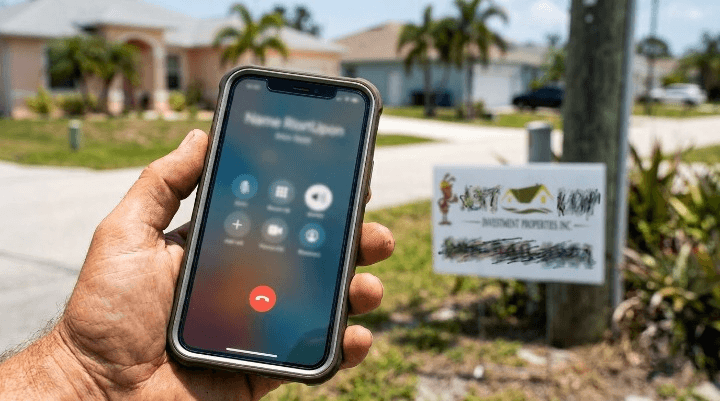
Somebody calling themselves “Antonio” or “a rep from Antlop” reached out about your house, and something about it felt off. Trust that instinct. If you’re trying to spot cash home buyer scams in South Florida, you’re not being paranoid — there’s a warning posted right on our own homepage about this exact problem, because other sites have lifted Antonio’s name and photo to run fake testimonials, then sold the contact info they collected to whoever’s buying leads that week.
It’s not a hypothetical. It’s happening to real homeowners across Miami-Dade and Broward right now, and most of them did nothing wrong except answer the phone. Here’s what the patterns actually look like, and what to do if you think you’ve already run into one.
Why South Florida Draws So Many Cash Home Buyer Scams
Distressed and inherited properties, hurricane and flood damage, and a homeowner base that’s often dealing with foreclosure or an out-of-state inheritance all at once — that combination makes this market genuinely attractive to real investors. It also makes it attractive to people who never intend to buy anything. A lot of the worst operators aren’t local at all. They’re running the same bandit-sign, burner-number campaign in a dozen metros simultaneously, and Miami-Dade is just one more zip code on the list.
Six Scam Patterns to Watch For
- The lead reseller posing as a buyer. The sign says “we buy houses, cash, any condition.” The person who calls you back has no intention of buying anything — they’re collecting your address, phone number, and situation, then selling that lead to an actual investor (or several) for a fee. You never find out who’s really behind it until a stranger shows up at your door.
- Someone borrowing a real company’s identity. This is the one behind our own homepage warning. A scammer builds a site or a set of reviews using a legitimate local investor’s name and face, then uses that borrowed credibility to get you comfortable handing over information. The fix is simple but easy to skip under pressure: look up the real company’s number independently — don’t call back the number the caller gave you — and confirm you’re actually talking to them.
- “Send a deposit to lock in your offer.” A legitimate cash buyer is the one paying you. If anyone asks you for money — an application fee, a “processing” deposit, an earnest-money wire — before they’ve even made you an offer, stop the conversation there.
- The clock that’s always about to run out. “This offer expires tonight” is a pressure tactic, not a real deadline. A company with actual capital behind it doesn’t need you to sign in the next twenty minutes, because the math on their offer doesn’t change overnight.
- The deed that quietly changes hands. This one specifically targets homeowners already behind on payments or facing foreclosure. Someone offers to “take over your payments” or “help you avoid foreclosure,” and buried in the paperwork they hand you is a deed transfer, not a payment plan. You think you’re getting breathing room. You’ve actually signed your house away. If you’re anywhere near a foreclosure filing, check what’s been recorded against your property through the county clerk before you sign anything presented as “relief.”
- Wire instructions that changed at the last minute. This one hits at closing, not before it. A scammer monitoring an email thread between you, your title company, and the buyer sends a last-second message with “updated” wire instructions. The money goes to them instead of you, and it’s usually gone for good. Before you wire anything to or from a closing, call the title company at a number you already know is real — never one from an email — and confirm verbally.
What a Legitimate Cash Offer Actually Looks Like
| Signal | Legitimate Cash Buyer | Scam Operation |
|---|---|---|
| Proof of funds | Provides it on request, no hesitation | Dodges the question or avoids it entirely |
| Payment requests | Never asks you for money | Asks for a deposit, fee, or “processing” payment |
| Local presence | Real office address, named person | 800 number only, rotating reps, no local footprint |
| Reviews | Verifiable on Google or BBB, real history | Only glowing reviews hosted on their own site |
| Timeline pressure | Gives you time to decide | Pushes a same-day or same-hour signature |
| Contract terms | Written in plain, no-obligation language | Vague pricing or buried assignment clauses |
A real, funded buyer can show you proof of funds without hesitation, has a physical office you could actually drive to, a named person attached to the business, and reviews you can find somewhere other than their own website. Antlop Investment Properties has bought more than 200 homes directly across Miami-Dade, Broward, and Palm Beach counties since 2012, funded entirely with our own capital, not a referral list. We’re endorsed by the Broward Real Estate Investors Association (BREIA) — read more about our approach to buying homes across South Florida, or run any company through our full vetting checklist before you sign anything.
If You Think You’ve Already Been Targeted
Don’t send anything further, especially money. If you’ve already wired funds, call your bank immediately — there’s sometimes a short window to recall a transfer. If you gave out personal or financial details, a credit freeze is worth considering. Check the Miami-Dade or Broward County Clerk’s recorded documents to see whether anything has been filed against your property, particularly if the contact came while you were already dealing with a foreclosure situation. File a report with the Florida Attorney General’s consumer protection division and your local police non-emergency line. And if you’re behind on payments and unsure what your real options are, talk to a short sale specialist who can walk you through what’s actually available before a sale date gets set.
Frequently Asked Questions
How do I know if a “we buy houses” company is legit?
Ask for proof of funds, confirm there’s a real local address and a named person behind the business, and check for reviews outside their own website. A legitimate buyer never asks you for money before making an offer and never pressures you to sign the same day.
Is it a scam if the company doesn’t see my house in person before making an offer?
Not necessarily. Plenty of legitimate buyers make a preliminary offer from photos or a video walkthrough and finalize it after visiting in person. The red flag isn’t skipping the visit — it’s being asked to pay something before any offer exists at all.
Someone used a real company’s name and photos to contact me. What do I do?
Look up the real company’s phone number on your own, independent of anything the caller gave you, and call to confirm whether they actually reached out. Report the impersonation to that company and to the Florida Attorney General’s office.
Can I really lose my house through a foreclosure “rescue” offer?
Yes, if the paperwork you sign turns out to be a deed transfer instead of a payment arrangement. Anyone who contacts you unsolicited about “saving” your house from foreclosure deserves extra scrutiny — read what you’re signing carefully, or better yet, have someone else read it with you before you sign.
Where can I actually verify a cash buyer’s reviews?
Check their Google Business Profile or Better Business Bureau listing rather than testimonials hosted only on their own website. A real history with a real address attached is much harder to fake.
Ready to Avoid Cash Home Buyer Scams in South Florida?
Most of what makes a cash buyer scam work is speed and pressure — getting you to act before you’ve had a chance to check anything. Slow down, verify independently, and any legitimate buyer will still be there on the other end of the phone. Antlop Investment Properties has been buying homes directly across South Florida since 2012, with a real office in Miami Lakes, a BREIA endorsement, and no fees or pressure — ever.
Get My Fair Cash Offer →

2 thoughts on “Spotting Cash Home Buyer Scams in South Florida”
Pingback: Sell House for Cash Miami: How the Process Really Works
Pingback: What Is a Cash Home Buyer? Cash Home Buyers Miami Guide